
What is sukhdi (sukhadi)? The Gujarati gol papdi, explained
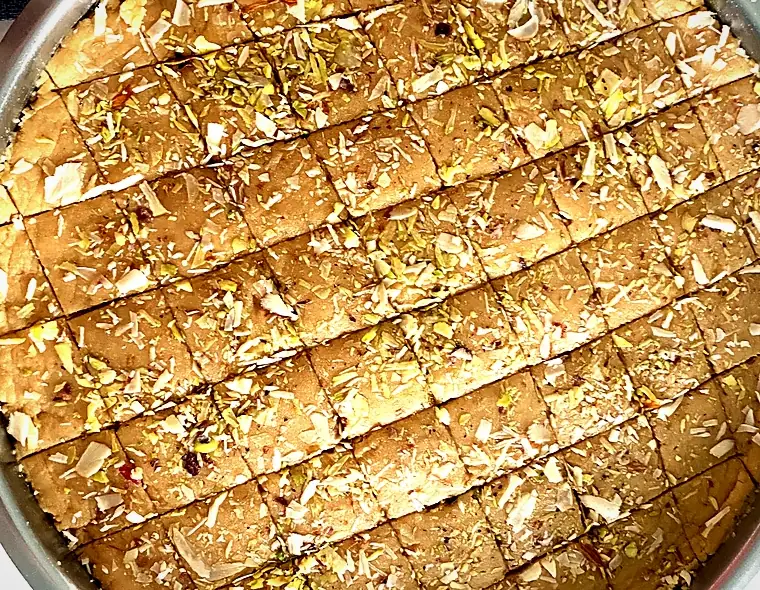
Sukhdi is a traditional Gujarati sweet made from just three things: flour, ghee and jaggery. The flour is roasted slowly in ghee until it turns golden and smells nutty, jaggery is stirred in off the heat, and the mixture is pressed into a greased thali and cut into diamonds while it is still warm. In English it is spelt both sukhdi and sukhadi, and in much of Gujarat it is also called gol papdi or gud papdi — gol and gud both mean jaggery.
The three ingredients
Flour. Traditionally whole-wheat flour, often stone-ground (chakki) flour. Millet flours such as jowar are used too.
Ghee. The ghee carries the aroma and decides the texture. Cutting back on it, or swapping it for vanaspati, is the usual shortcut — and the reason shop sukhdi often tastes flat or waxy.
Jaggery. Never refined sugar. Jaggery gives sukhdi its colour and its deep, caramel sweetness; darker jaggery makes a darker sukhdi.
How it is made
The flour is roasted in hot ghee over a low flame and stirred constantly until it changes colour, turns loose and releases its aroma. The pan comes off the heat, grated jaggery goes in and melts in the residual warmth, and the mixture is poured straight into the thali. Timing matters: if the jaggery is cooked, sukhdi turns chewy instead of melting in the mouth. It is topped — commonly with almond and pistachio — and cut into diamonds before it sets.
Varieties
The plain three-ingredient sukhdi is the everyday classic. Homes then vary it:
- Dry-fruit sukhdi — enriched with nut powders and loaded with almond and pistachio. See our Special Dry-Fruit Sukhdi.
- Millet sukhdi — made with jowar (sorghum) flour instead of wheat. See our Jowar Sukhdi.
- Winter sukhdi — the cold-weather preparation, with soonth (dry ginger), ganthoda, gundar (edible gum) and coconut. See our Winter Special Sukhdi.
When it is eaten
Sukhdi is an everyday sweet in Gujarati homes rather than a showpiece. It travels well, so it has always gone into steel dabbas for train journeys and into bags of family members leaving home. It is made in winter, for festivals and family occasions, and is offered as prasad in temples across Gujarat.
Sukhdi, sukhadi, gol papdi, gud papdi — are they the same?
Yes. In Gujarati it is written સુખડી, which is why you will see it spelt sukhdi, sukhadi and sometimes sukadi in English. Gol papdi and gud papdi are simply other household names. Whatever the spelling, the sweet is the same: flour roasted in ghee and set with jaggery.
How to store sukhdi
Keep it in an airtight container in a cool, dry place, away from heat. Do not refrigerate — the ghee hardens and the texture is lost — and do not freeze. Homemade sukhdi without preservatives is best eaten within about 25–28 days.
Rather not stand at the stove?
We make sukhdi the way Gujarati homes do — chakki flour, cow ghee, organic jaggery, almond and pistachio — in small batches in Vadodara, only after you order. Delivery is included in the price, across India.
Regular SukhdiDry-FruitJowarWinter Special